



GROUNDSPACE
Booth 403-17
#NGSO #RFmonitoring #UTlocalization
about us
Since the emergence of large-scale LEO constellations, control and supervision of the radio spectrum have become strategic imperatives. The rapid proliferation of NGSO systems has significantly increased the density, granularity, and operational complexity of satellite-based communications. While these constellations provide global connectivity and enhanced resilience, they also introduce new challenges related to unauthorized usage, dual-use exploitation, and the potential misuse of commercial satellite infrastructure for illicit or hostile purposes.
Traditional centralized monitoring architectures, originally designed for a limited number of satellites and continent-scale beams, are no longer adapted to the scale and structure of modern NGSO constellations. The proliferation of satellites, combined with the use of highly directional spot beams and aggressive frequency reuse schemes, dramatically increases the density and geographic fragmentation of radio emissions. The narrowness of these beams reduces the effectiveness of distant, centralized monitoring sites and complicates wide-area supervision. This new paradigm requires distributed, resilient, and autonomous monitoring capabilities capable of operating continuously and at scale. Effective spectrum supervision now depends on persistent and distributed visibility.
In this context, Groundspace offers CelesGuard, a radio spectrum monitoring system built around a distributed network of autonomous sensors deployed at customer sites and equipped with electronically steerable antennas. Designed for scalability and operational resilience, the system enables real-time detection of unauthorized or anomalous activity, advanced pattern-of-life analysis, and regulatory compliance verification. CelesGuard provides satellite operators, regulators, and security stakeholders with persistent and sovereign visibility over spectrum usage.
Complementing CelesGuard, Groundspace has developed WHISPR, a tactical system dedicated to the detection and geolocation of unauthorized NGSO terminals within a defined area of interest. In environments where NGSO terminals may be exploited for criminal activity, drug trafficking, maritime piracy, sanctions evasion, or other hostile operations, rapid identification and localization capabilities are critical. Available in both portable and platform-transportable configurations, with a range of up to 25 km, WHISPR enables the detection and geolocation of unauthorized terminals. It equips defense and security forces, authorities, and critical infrastructure operators with actionable situational awareness, supporting investigations, enforcement actions, and the protection of sensitive sites, borders, and maritime zones.
Together, CelesGuard and WHISPR provide complementary strategic and tactical capabilities, enabling authorities to monitor, understand, and maintain dominance over NGSO-related spectrum activity across both national territory and operational theaters.
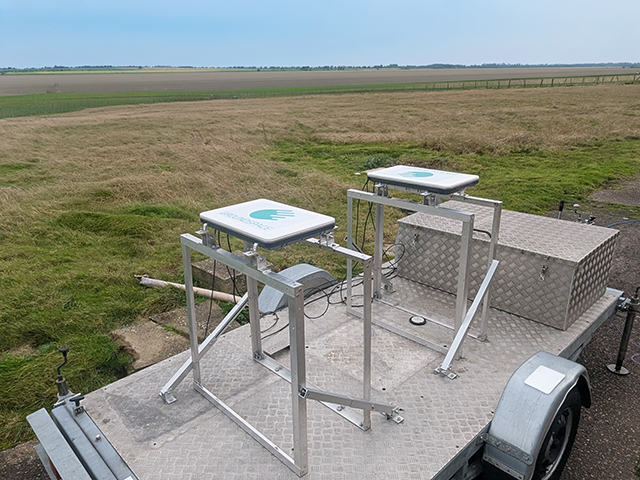
CelesGuard is a radio spectrum monitoring system designed for large NGSO constellations. It is built on a distributed network of autonomous sensors deployed at customer sites and equipped with electronically steerable antennas. The system delivers persistent and distributed visibility over spectrum activity, enabling real-time detection of unauthorized or anomalous emissions, advanced pattern-of-life analysis, and regulatory compliance verification.
CelesGuard supports satellite operators, regulators, and security stakeholders in maintaining operational control and full awareness of spectrum usage at scale.

WHISPR is a tactical system for the detection and geolocation of unauthorized NGSO terminals within a defined area of interest. Designed for field deployment, it is available in portable and platform-transportable configurations, with a range of up to 25 km.
WHISPR enables rapid identification and localization of suspicious terminals, supporting enforcement actions and field operations. It provides defense and security forces, authorities, and critical infrastructure operators with actionable situational awareness in contexts involving illicit communications and hostile activities.
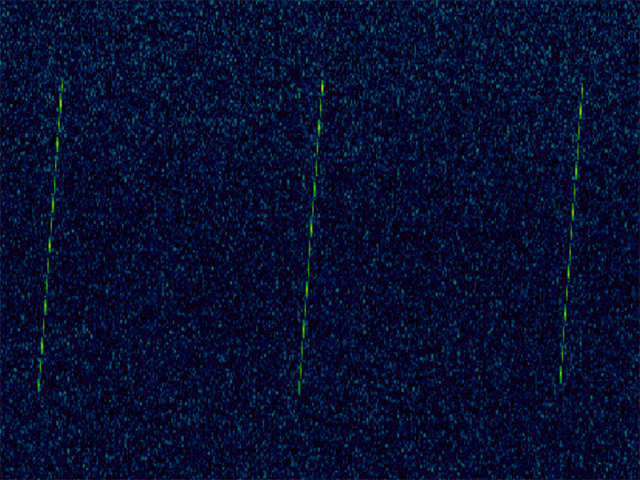
SARShield is an automated monitoring system dedicated to the detection and characterization of SAR satellite imaging activity. The system continuously monitors radar emissions, automatically detecting imaging events, classifying received signals, and matching them to specific satellites and orbital passes.
By correlating signal characteristics with space object databases, SARShield provides timely awareness of SAR observation activity over areas of interest. It supports authorities and security stakeholders in assessing surveillance exposure, protecting sensitive sites, and maintaining operational discretion.
OUR ECO-RESPONSIBLE COMMITMENTS :
Our commitment is rooted in an approach that combines technological performance, societal impact, and environmental responsibility, reflecting our determination to take concrete action in support of the ecological transition.
By reducing interference in frequency bands, we help optimize the use of orbital resources through more efficient and less energy-intensive technologies, promoting the sustainable management of satellite infrastructures.
Our solutions also contribute to strengthening the security of space communications, support government agencies in managing satellite traffic, and foster collaboration with universities to train the next generation of space engineers.
CONTACT US

3 Avenue de l’Europe, 34830 Clapiers – FRANCE
EMAIL : radim.badsi@ground.space
TEL : +33 (0) 4 11 93 82 38
Mobile : +33 (0) 7 82 88 13 89
https://www.ground.space